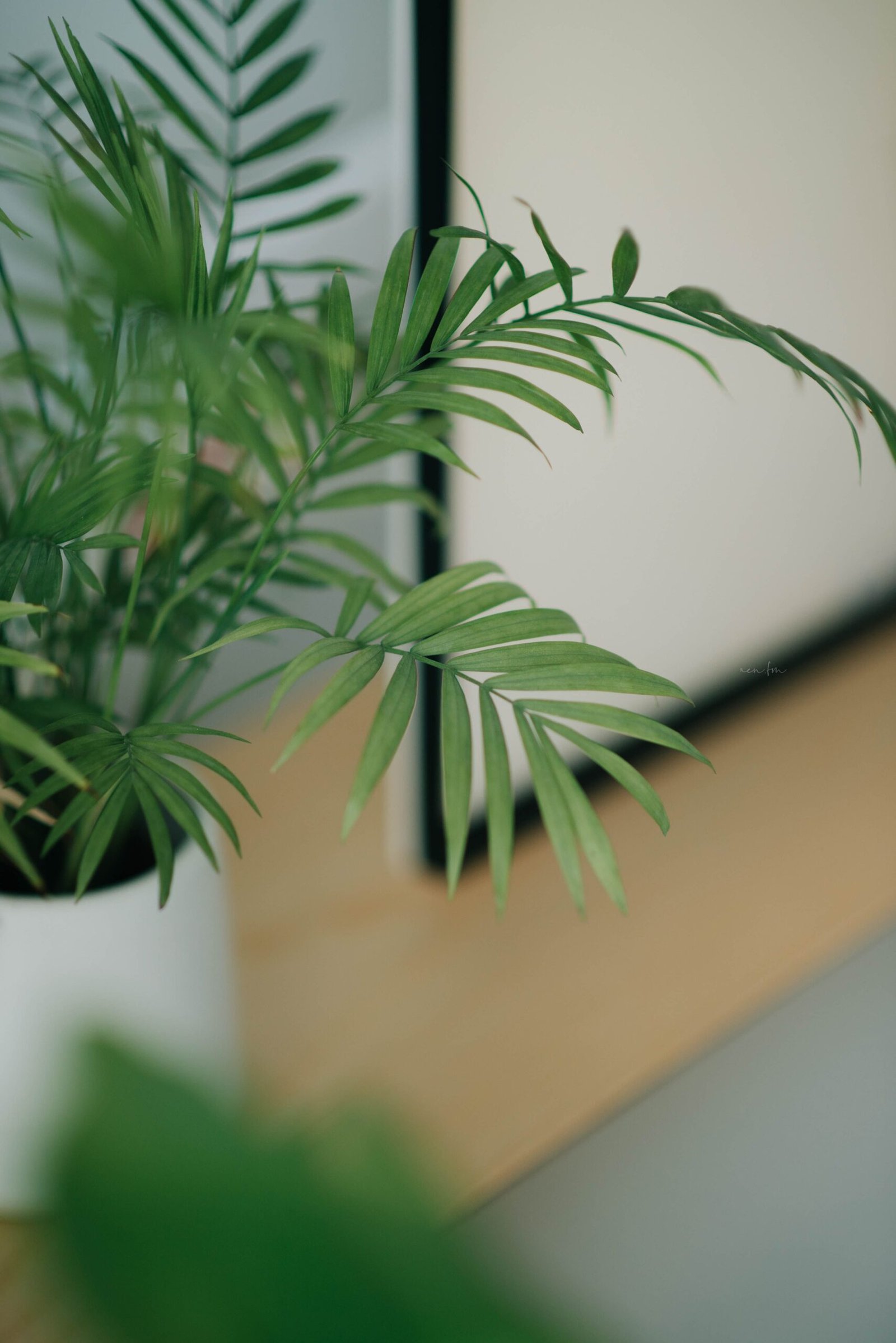
How to Display Houseplants Without Filling Every Windowsill
Houseplants tend to end up on windowsills for one very sensible reason: that is where the light is.
The trouble is, once you have more than a couple, every window can start looking like a plant holding area. You cannot open anything without moving three pots first, leaves get trapped behind curtains and the nicest plants are often viewed from the back.
Before buying shelves, stands or hanging planters, try moving around the plants you already have. A different position can completely change how both the plant and the room look.
Move a Bigger Plant Into an Empty Corner
A medium or large houseplant can fill an awkward corner surprisingly well.
Look at the spaces beside a sofa, next to a sideboard or between two pieces of furniture. If the light is suitable, moving a plant there can make far more impact than leaving it squeezed among five smaller pots at the window.
You may also discover that the plant itself looks better when it has a little room around it.
Put Plants on Furniture You Already Own
Sideboards, chests of drawers, bookcases, kitchen worktops and occasional tables can all provide useful plant space.
You do not need a plant on every available surface. One well-placed plant can be enough.
A trailing plant that has been sitting on a windowsill, for example, may look much better on top of a bookcase where its stems can actually hang down.
Likewise, a small plant that disappears among larger pots may suddenly look quite deliberate sitting beside a lamp or a stack of books.
Break Up the Rows
If you have six plants lined up along one window, try leaving the ones that genuinely need the brightest position there and moving the others elsewhere.
Plants with lower light requirements can often live a little further into the room, while others may work on nearby furniture rather than directly against the glass.
You are not trying to force plants into dark corners simply because they look nice there. Light still comes first.
But there is usually more flexibility than a straight line of pots suggests.
Group a Few Together
Instead of having one small plant on every surface, try putting two or three together.
Different heights and leaf shapes tend to make a group more interesting, and suddenly three perfectly ordinary houseplants can look like a proper feature.
You can do this with plants and pots you already own. Move them around until the combination looks right rather than worrying about whether everything matches.
It is a home, not a garden-centre display.
Try Rooms You Have Ignored
Plants often collect in the living room while perfectly usable spaces elsewhere get forgotten.
A bright bathroom can suit plants that enjoy humidity. A kitchen may have an unused corner away from the hob. Bedrooms can often take one larger plant without feeling crowded.
Even a hallway can work if it receives enough natural light.
Walk around the house and look for places where a plant could replace an empty space rather than simply adding more clutter.
Move Them Again If It Doesn’t Work
There is no rule saying that once a houseplant has been placed somewhere, it must remain there forever.
Try a plant in a different room for a week or two. Look at it from where you normally sit. See whether you actually like it there and, more importantly, whether the plant likes it too.
If it starts stretching towards the light or clearly looks unhappy, move it back.
Displaying houseplants is partly trial and error. The aim is not to create a perfectly styled indoor jungle. It is simply to spread a little greenery through the house without sacrificing every windowsill you own.
And sometimes the best new plant display costs absolutely nothing. You just move the plants.