What to Divide and Replant in Early Autumn
Early autumn is one of those useful gardening windows that is easy to miss.
The heat is beginning to ease, the soil is still warm, and many perennial plants have finished the main part of their growing season. That makes it a good time to lift and divide some established clumps without asking them to cope with midsummer heat at the same time.
Early autumn is one of those useful gardening windows that is easy to miss.
But not everything needs dividing just because it has been in the ground for a few years.
Some plants can sit happily in the same place for a decade. Others gradually become crowded, flower less well or spread far beyond the space you originally gave them.
The trick is knowing which is which.
Divide Plants That Grow in Expanding Clumps
The plants most likely to benefit from division are perennials that gradually spread outwards from a central crown or root system.
Hardy geraniums, hostas, daylilies and many similar clump-forming perennials fall into this group.
When they are young, the clump is compact and productive. Over time it becomes wider and denser. Eventually the middle may become woody, sparse or bare while the strongest growth moves towards the outside.
That is a much better reason to divide a plant than simply deciding it has reached a certain age.
If the plant is still flowering well, fits comfortably in its space and looks healthy, leave it alone.
A Bare Middle Is One of the Clearest Signs
One of the easiest signs to spot is a plant that has begun growing in a ring.
The outside of the clump looks healthy, but the centre has become weak, bare or full of old dead material.
This happens because the younger growth is gradually moving outwards while the oldest part of the plant remains in the middle.
Dividing allows you to discard that tired centre and replant the younger, vigorous sections from around the edge.
You are not really making one plant into several for the sake of it. You are renewing it.
Fewer Flowers Can Mean the Plant Is Too Crowded
A perennial that used to flower generously but now produces more leaves than flowers may be overcrowded.
Roots and crowns can become packed together, all competing for water, nutrients and space.
Dividing the plant gives the strongest sections more room and can help restore flowering.
That does not mean poor flowering automatically equals overcrowding.
Shade, drought, unsuitable soil or simply a difficult growing season can reduce flowers too. Look at the whole plant before reaching for the spade.
If it is congested as well as flowering less well than it used to, division is much more likely to help.
Sometimes the Plant Has Simply Outgrown Its Space
There is nothing wrong with dividing a healthy plant because it has become too big.
A hosta that was perfectly sensible beside a path five years ago may now be attempting to claim the entire route.
Hardy geraniums can spread through neighbouring plants. Daylilies can form substantial clumps. Some spreading perennials simply keep going until something stops them.
If the plant is healthy but has become too large, lifting it gives you the chance to reduce the clump and put back only the amount you actually want.
The spare pieces can be replanted elsewhere, given away or used to fill another part of the garden.
Free plants are one of the nicer side effects of the job.
Flopping Can Be Another Clue
Plants sometimes begin falling open in the middle when the clump becomes very large and dense.
Instead of standing as a reasonably compact group, the stems lean outwards and leave an untidy hole through the centre.
Division can help, particularly if the plant has also become crowded at the roots.
But check the obvious things first.
A plant growing in too much shade may stretch and flop regardless of how recently it was divided. Very rich soil can also produce soft growth that falls over.
Not every leaning plant needs surgery.
Choose Plants That Have Finished Flowering
Early autumn is most useful for plants whose main flowering period is already over.
You do not want to lift something just as it is preparing to put on its best display.
Many spring and early-summer flowering perennials can be divided once they have finished flowering and begun slowing down.
Later-flowering plants are better left until their display is over, and some are best divided in spring instead.
This is why a rigid list of plants to divide in autumn is not especially helpful. Climate, variety and flowering time all affect when a plant is ready.
Look at what the plant is doing in your garden.
If it is still actively flowering, leave it alone.
Some Plants Are Better Left Undisturbed
Not every perennial enjoys being divided.
Peonies, for example, can live happily in the same place for many years and generally do not need regular division. They can be lifted and divided if necessary, but there is no reason to disturb them simply because autumn has arrived.
Deep-rooted plants and those with a substantial taproot can also dislike being moved.
Ornamental grasses need a little thought too rather than being treated as one group. Some divide well at this time, while many are better divided when growth begins again in spring.
If a plant is healthy, flowering well and not causing a problem, there is no prize for digging it up.
How to Divide Without Destroying the Plant
Water the plant beforehand if the soil is dry. It is much easier to work with a hydrated plant than one already struggling for moisture.
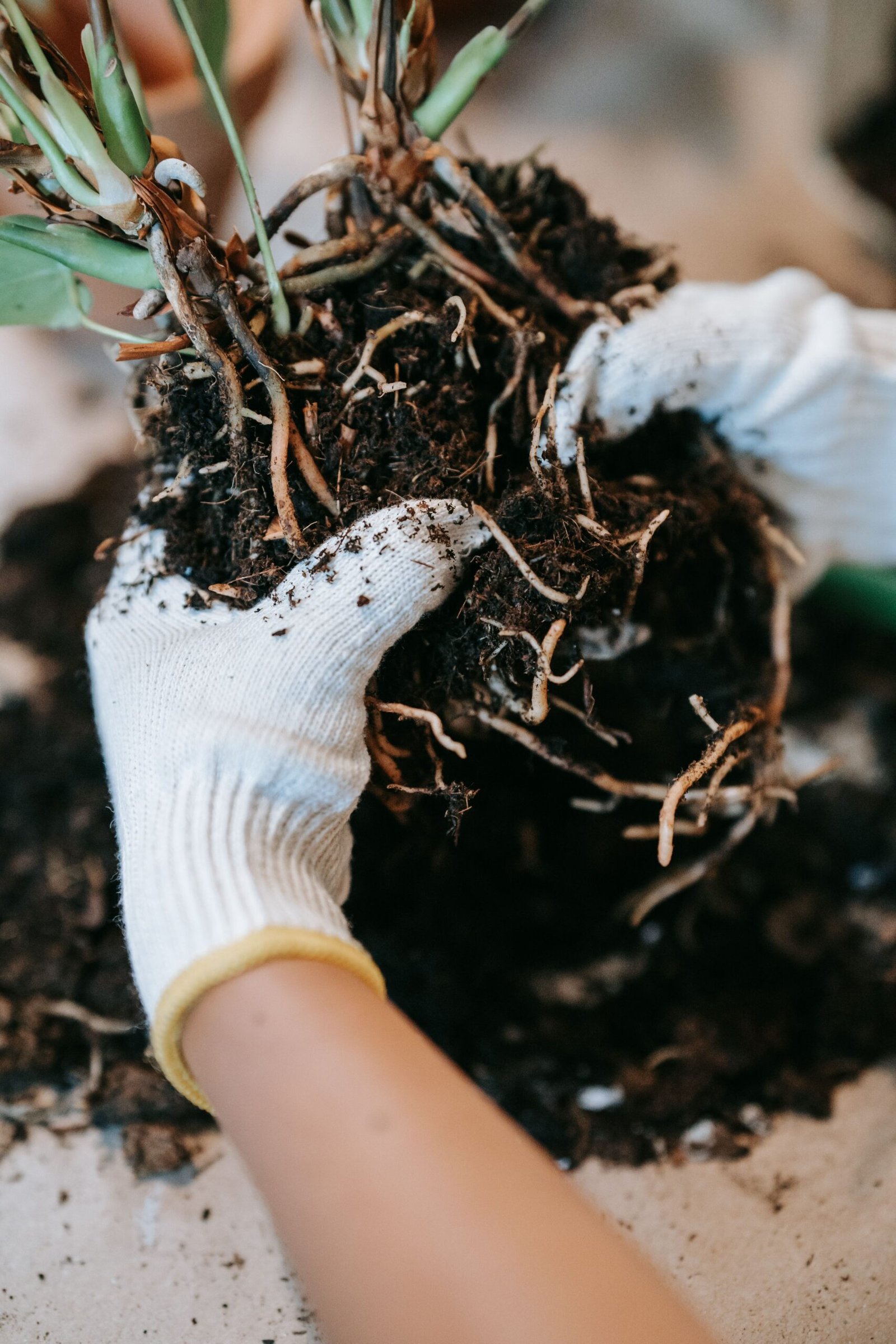
Lift the whole clump with as much root as you can reasonably manage.
Once it is out of the ground, have a proper look at it.
Some plants pull apart surprisingly easily by hand. Others can be separated using two garden forks or cut into sections with a clean spade or knife.
Each piece needs healthy roots and several good shoots or growing points.
There is no benefit in making dozens of tiny divisions simply because you can. Larger sections usually establish more quickly and cope better with their first winter.
Remove any dead, damaged or obviously diseased material while the plant is out of the ground.
Replant Before the Roots Dry Out
One advantage of early autumn is that the soil is usually still warm enough for roots to begin settling in before winter.
That advantage disappears if the divisions spend half the afternoon drying out beside the wheelbarrow.
Replant them at roughly the same depth they were growing before, firm the soil around the roots and water thoroughly.
If you are putting a piece back into the original position, take the opportunity to add some compost or other organic matter before replanting.
The plant has probably been using that patch of ground for several years, so giving the soil a little attention makes sense.
Keep Watering If Autumn Stays Dry
Cooler weather can make it easy to assume new plants no longer need much water.
The air may feel autumnal while the soil underneath is still surprisingly dry.
Newly divided plants have lost part of their root system and need enough moisture to establish new roots.
Check them regularly during dry spells for the first few weeks.
There is no need to keep the ground permanently wet, but do not plant them and assume the season will take care of the rest.
Do Not Divide Everything at Once
A mature garden can suddenly look very empty if every large perennial is lifted and chopped apart in the same weekend.
There is rarely any need.
Deal with the plants that are clearly telling you they need attention: the ones with bare centres, declining flowers, overcrowded growth or no respect whatsoever for the space originally allocated to them.
Leave the healthy ones alone.
Dividing perennials is not routine maintenance that has to be done to every plant on a schedule.
It is a useful way of renewing the plants that need it, controlling the ones getting too large and occasionally filling another part of the garden for free.
Early autumn just happens to be a very good time to notice which ones are asking for help.