How to Make a Small Garden Better for Wildlife
You do not need a huge garden, a pond the size of a swimming pool or an acre of wildflower meadow to make a real difference to wildlife.
A small garden can support birds, bees, butterflies, beetles, hedgehogs and plenty of less obvious creatures if it gives them the basics they need: food, water, shelter and somewhere safe to breed or overwinter.
The aim is not to turn the garden into a wilderness.
It is simply to make the space you already have work a little harder.
Give Birds Somewhere to Hide
Open gardens can feel surprisingly exposed if you are a small bird.
Dense shrubs, hedges and climbers give robins, wrens, sparrows and other garden birds somewhere to shelter from bad weather and hide from predators such as cats and sparrowhawks.
Evergreen shrubs are especially useful because they keep their leaves through winter, when cover elsewhere is thinner.
You do not need a huge hedge. Even one dense shrub in a corner can create a useful refuge.
Climbers can do the same job on a fence or wall. Ivy, honeysuckle and clematis all add cover without taking up much ground space.
Grow Food for More Than Yourself
Different plants feed different creatures.
Flowers provide nectar and pollen for bees, butterflies and hoverflies. Plants with simple, open flowers are often easiest for insects to reach. Lavender, thyme, oregano, hardy geraniums and many daisylike flowers are good examples.
Shrubs that produce berries can feed birds later in the year. Blackbirds, thrushes and other fruit-eating birds will happily use berries from plants such as hawthorn, rowan, pyracantha and cotoneaster.
Seed heads matter too.
Leave some sunflowers, teasels or other seed-producing plants standing after flowering and finches may feed from them through autumn and winter.
You do not need every type of plant. What matters is having different food available at different times of year.
Keep Something Flowering for Longer
A garden that bursts into flower for three weeks in June and then stops is less useful than one that offers a smaller amount of food over many months.
Early flowers help bees emerging in spring when there is not much else available.
Late-flowering plants give insects somewhere to feed as summer starts winding down.
Ordinary garden plants can do a lot of the work here.
Crocus and hellebores can provide early food. Lavender, thyme and oregano keep things going through summer. Sedums and asters can carry on much later.
You do not need to redesign the garden. When you next buy a plant, notice when it flowers and try to fill any obvious gaps.
Add Water, Even If You Have No Room for a Pond
Birds need water for drinking and bathing.
Bees, butterflies and other insects need water too, but they need somewhere shallow and safe to land.
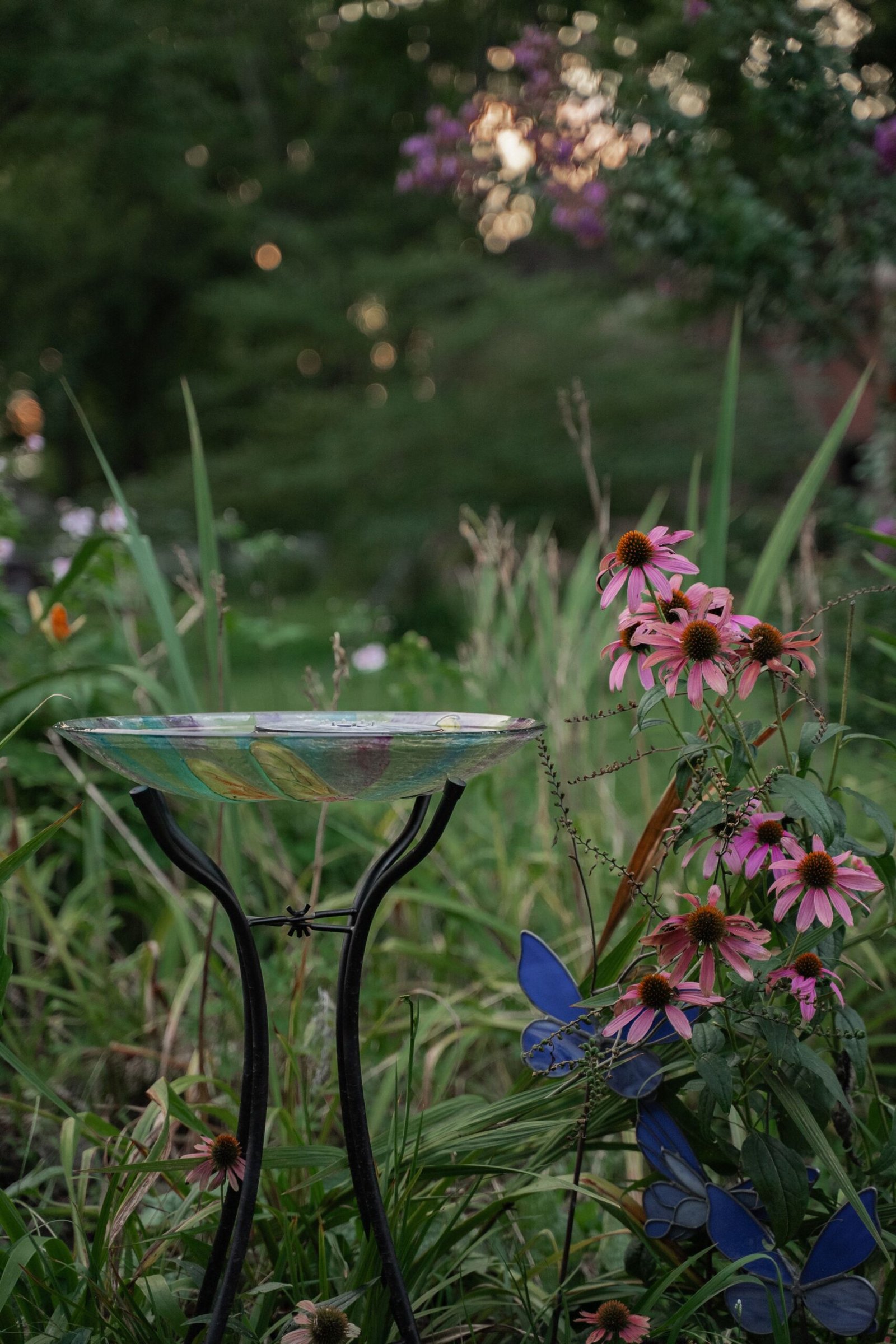
A bird bath is useful, but so is a large plant saucer or shallow container. Add a few stones so insects can land without ending up in deep water.
A very small pond can support even more wildlife. Frogs may use it, dragonflies can visit and aquatic insects can appear surprisingly quickly.
If you create anything deeper than a shallow dish, make sure there is an easy escape route. A sloping edge, gravel or a pile of stones means a hedgehog or other small animal that falls in can climb back out.
Leave a Few Messy Places
A little untidiness is enormously useful.
Fallen leaves provide damp shelter for worms, beetles, woodlice and other small invertebrates. Those creatures then become food for birds, frogs and hedgehogs.
Dead stems can contain hollow spaces where insects shelter through winter.
A small pile of logs tucked behind a shrub can slowly rot down and become home to beetles, fungi and other decomposers.
None of this means allowing the whole garden to disappear under debris.
One undisturbed corner can add a completely different type of habitat.
Let Some Grass Grow Longer
If you have a lawn, you do not need to stop mowing all of it.
Leaving even a small patch or strip of grass longer creates shelter for insects and other small creatures. It also gives plants such as clover a chance to flower, providing nectar for bees.
You can still keep paths or the main lawn short if you prefer a tidier garden.
A patch behind a border or along one boundary is often enough.
Give Wildlife Somewhere to Nest
Food brings wildlife into the garden. Safe nesting places encourage it to stay.
Dense shrubs and hedges provide natural nesting sites for birds, while climbing plants on fences and walls can create protected places too.
Bird boxes can help where natural holes and dense planting are limited, particularly in newer gardens.
Different birds use different styles of box, so there is little point putting up several random ones and hoping for the best. One suitable box in a quiet, sheltered position is more useful than a row of badly placed ones.
If birds are already nesting in a hedge or shrub, avoid heavy cutting until the nest is no longer in use.
Make It Possible for Hedgehogs to Get In
A garden can contain everything a hedgehog needs and still be useless if it cannot enter.
Solid fences and walls divide gardens into isolated little islands.
A small ground-level gap between neighbouring gardens can allow hedgehogs to move through in search of food and mates.
They feed on many invertebrates, including beetles, caterpillars and worms, so gardens with healthy soil and slightly messy areas tend to offer more natural food.
Before making a gap, check where it leads.
Connecting two gardens is useful. Creating a direct route onto a busy road is not.
Look After the Soil Life Too
Wildlife does not begin above ground.
Healthy soil contains worms, springtails, beetles, fungi, bacteria and countless other organisms.
They break down dead material, recycle nutrients and improve soil structure.
They are also part of the garden food chain.
Worms feed blackbirds and robins. Beetles and larvae feed birds, hedgehogs and amphibians.
Adding compost, covering bare soil with organic matter and avoiding unnecessary digging all help protect that underground community.
You may not see most of it, but the rest of the garden depends on it.
Think Before Reaching for a Spray
It is easy to see aphids or caterpillars and immediately want them gone.
But insects are food.
Ladybirds and hoverfly larvae eat aphids. Blue tits collect caterpillars for their chicks. Beetles, spiders and other predators help keep populations in balance.
If every insect disappears, much of the food that other wildlife relies on disappears with it.
That does not mean you have to sacrifice every vegetable or ornamental plant.
It simply means deciding whether a few chewed leaves genuinely require action.
Quite often, they do not.
Small Gardens Can Be Surprisingly Rich
You do not need every wildlife feature at once.
One dense shrub, flowers for pollinators, a dish of water, a few leaves left under the hedge and one patch that is not constantly disturbed already gives wildlife several different reasons to visit.
Add a climber, let some herbs flower, leave a few seed heads standing and suddenly the garden has food and shelter at several levels.
That is how a small space becomes useful to wildlife.
Not by making it wild.
By making sure the creatures that visit can actually find something they need.