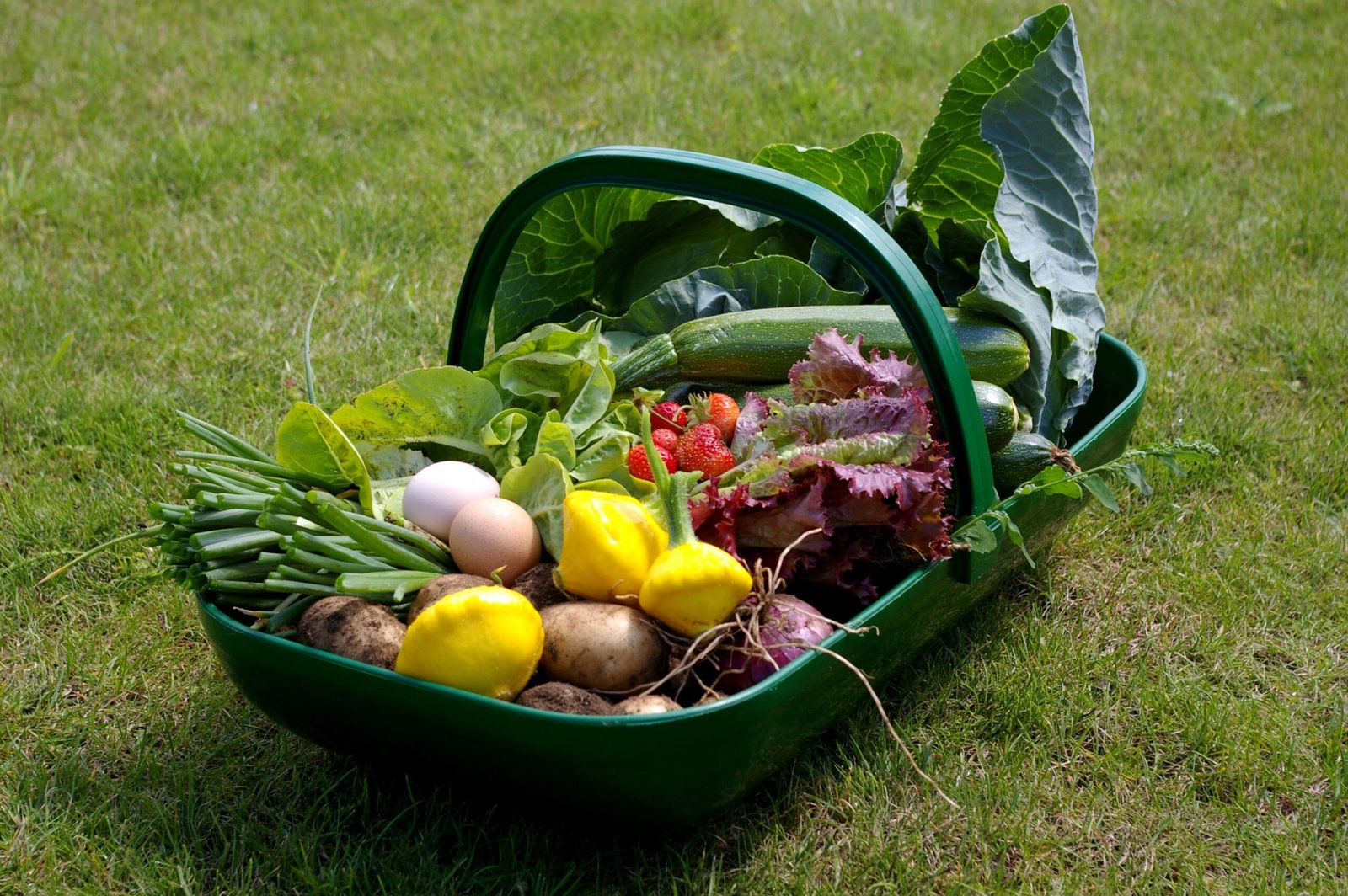
How Do You Know When Vegetables Are Ready to Pick?
There is a slightly ridiculous stage in growing your own vegetables when you have successfully kept something alive for three months and then realise you have absolutely no idea when you are supposed to eat it.
Is that cucumber ready?
Should the carrots be bigger?
Does a red pepper have to be red?
And exactly how long can you leave a courgette before it becomes a marrow when your back is turned?
Fortunately, vegetables are usually quite good at telling you when they are ready. You just need to know what you are looking for.
The main thing to remember is that there is rarely one perfect harvest day. Most vegetables have a harvest window, and quite a few are better picked a little young than left until they have achieved maximum possible size.
Bigger Is Not Usually Better
This is probably the most useful harvesting rule in the kitchen garden.
We tend to assume that if a vegetable is still growing, we should leave it alone.
That works brilliantly if your ambition is to grow the largest courgette in the neighbourhood. It is less useful if you actually want to eat it.
Courgettes, cucumbers, beans, peas and many root vegetables are generally sweeter or more tender when harvested before they reach monster proportions.
A young courgette has firm flesh and small seeds. Leave it another week and you may require both hands and a family-sized recipe.
Beans are similar. Once the individual beans are bulging heavily through the pod, the pod itself is usually becoming tougher.
With fast-growing vegetables, start checking earlier than you think you need to.
Look at the Vegetable, Not the Calendar
Weather makes a huge difference to how quickly vegetables grow.
A warm, wet week can suddenly send everything racing ahead. A cold spell can make plants sit there doing virtually nothing.
That is why counting days is never as useful as looking at the crop itself.
You are generally checking four things:
Size. Has it reached a useful eating size?
Colour. Has it developed the colour you would expect when mature?
Texture. Does it feel firm, crisp, tender or slightly soft, depending on the crop?
The plant itself. Is it still actively growing, or is the foliage beginning to die back and signal that the crop has finished?
Those clues tell you far more than a date ever will.
Some Vegetables Want Picking Young
These are the crops where waiting for them to become impressively large usually makes them worse.
Courgettes are the obvious example. Pick them while they are still firm and fairly small and the plant will simply make more.
The same applies to cucumbers, French beans and runner beans.
You are looking for vegetables that feel crisp and tender rather than mature and heavy.
Peas are slightly different because you want the pods to fill out, but not so much that they become tough and starchy. A quick squeeze tells you whether there are decent-sized peas inside.
And yes, opening one and eating a pea in the garden is a perfectly legitimate harvesting technique.
Possibly the best one.
Fruiting Vegetables Give You Plenty of Clues
Tomatoes, peppers and aubergines are easier because you can actually see what is happening.
Tomatoes develop their mature colour and soften slightly as they ripen. They should feel ripe rather than hard, but not squishy.
Peppers can often be harvested at several stages. Many start green and then ripen to red, yellow or orange.
A green pepper is not unusable or somehow a gardening failure. It is simply younger. Leave it on the plant and it will usually become sweeter as the colour changes.
Aubergines are best while their skins are glossy and the fruit is still firm. Once the skin becomes dull and the fruit noticeably soft, you have probably waited too long.
If a fruiting vegetable looks fully developed, feels right and looks good enough to eat, you probably do not need another week of staring at it.
Pick it.
With Root Vegetables, Pull One
Carrots, beetroot, radishes and potatoes are more annoying because most of the evidence is underground.
There is no special gardener’s trick that allows you to stare thoughtfully at a row of carrot leaves and know exactly what is happening six inches below.
You check.
With carrots and beetroot you can often see the top, or shoulder, of the root where it meets the soil. That gives you a reasonable idea of size.
But if you are unsure, pull one.
If it is tiny, leave the others longer.
If it looks lovely, start harvesting.
If it has become enormous and woody, make a mental note to start checking earlier next time.
And you do not have to harvest the whole row just because one is ready. Take what you need and let the rest carry on growing.
Leaves Are Ready When You Want to Eat Them
Leafy vegetables are wonderfully uncomplicated.
Lettuce, spinach, chard and many other leafy crops do not have one moment when they suddenly become ready.
Once the leaves are large enough to be useful, you can start harvesting them.
Taking the outer leaves and leaving the centre intact lets many plants continue producing for weeks.
The more useful thing to recognise is when you have waited too long.
Once lettuce or spinach starts sending up a flower stalk, or bolting, the leaves can become increasingly bitter. Hot weather can make this happen very quickly.
So with leaves, waiting for bigger is particularly pointless.
Eat them while they are tender.
Some Crops Tell You They Are Finished
Onions, garlic, potatoes, pumpkins and winter squash work differently.
These are crops where maturity matters, particularly if you want to store them.
Instead of looking only at the vegetable, watch the whole plant.
Onion leaves naturally start yellowing and falling over as the bulb finishes growing.
Garlic gives a similar signal, although it is generally harvested while some upper leaves are still green rather than after the whole plant has died back.
Maincrop potato foliage eventually yellows and dies.
Pumpkins and winter squash develop harder skins and dry, corky stems as they mature.
These crops are not asking to be picked young and tender. They are telling you they have completed their growing season.
Regular Picking Often Gives You More Food
There is another very good reason not to leave vegetables hanging around on the plant.
Plants are trying to reproduce.
Once beans, courgettes, cucumbers and similar crops successfully mature fruit and seeds, the plant has less reason to keep producing more.
Keep harvesting and it keeps trying.
That is why a small kitchen garden picked regularly can produce a surprising amount of food.
It is also why ignoring the courgette plant for ten days can result in three enormous marrows and absolutely no idea what to do with them.
Learn What Your Perfect Harvest Looks Like
The most useful thing you can do is stop worrying about whether you are picking vegetables at the officially correct moment.
Taste one.
You may prefer tiny beetroot. Someone else might like them larger.
You may love green peppers and have no interest in waiting for them to turn red.
You might want baby carrots for salads and leave another row to grow bigger for roasting.
That is one of the pleasures of growing food yourself. You do not have to wait until everything resembles the vegetables lined up under supermarket lights.
Pick things when they look good enough to eat.
If they are particularly tender and delicious, remember what they looked like.
If you have to saw through them with a kitchen knife, perhaps pick the next one a little sooner.
After a season or two, you stop wondering whether vegetables are ready.
You walk past, have a look, give something a squeeze, pull up a carrot to check and take dinner inside with you.