Build a Simple Leaf Mould Bin for Autumn
Every autumn, the garden suddenly produces far more leaves than seems reasonable.
A few are lovely under hedges or left in quiet corners for wildlife, but once the lawn, paths and patio disappear under them, you need somewhere for the excess to go. Rather than stuffing them into garden-waste bags every week, you can turn them into leaf mould: dark, crumbly material that is useful around beds and borders and costs you nothing but a bit of patience.
If you only have a couple of bags of leaves, black sacks are perfectly adequate. If your garden produces them by the barrowload, a simple leaf mould bin is far easier to live with.
And simple really does mean simple. This is not one of those garden projects that starts with “four stakes and some mesh” and somehow ends with a trip to the timber yard and £80 missing from your bank account.
What You’ll Need
For a basic leaf mould bin, you need:
- Four sturdy wooden stakes or strong bamboo canes
- Chicken wire, welded wire mesh or tough garden netting
- Garden wire or cable ties
- A hammer or mallet if you are using wooden stakes
- Secateurs or wire cutters
- Fallen leaves
A bin roughly a metre square is a useful size for many gardens, but there is no magic measurement. Make it fit the space you actually have and the amount of leaves you usually collect.
The important thing is that the sides let air through and the leaves stay contained rather than making one final bid for freedom across the lawn.
Put It Somewhere Sensible
Leaf mould does not need a glamorous location.
Behind a shed, beside the compost bins, at the back of a border or in an awkward corner that currently does very little can all work well.
What matters more is choosing somewhere you are happy to leave it for quite a while. Leaf mould is not instant compost, so there is no point putting the bin somewhere you will resent seeing it six months later.
A slightly sheltered spot is useful too, especially when the bin is newly filled and the leaves are still dry and determined to blow everywhere.
Build the Bin
Mark out a square and drive one stake firmly into each corner.
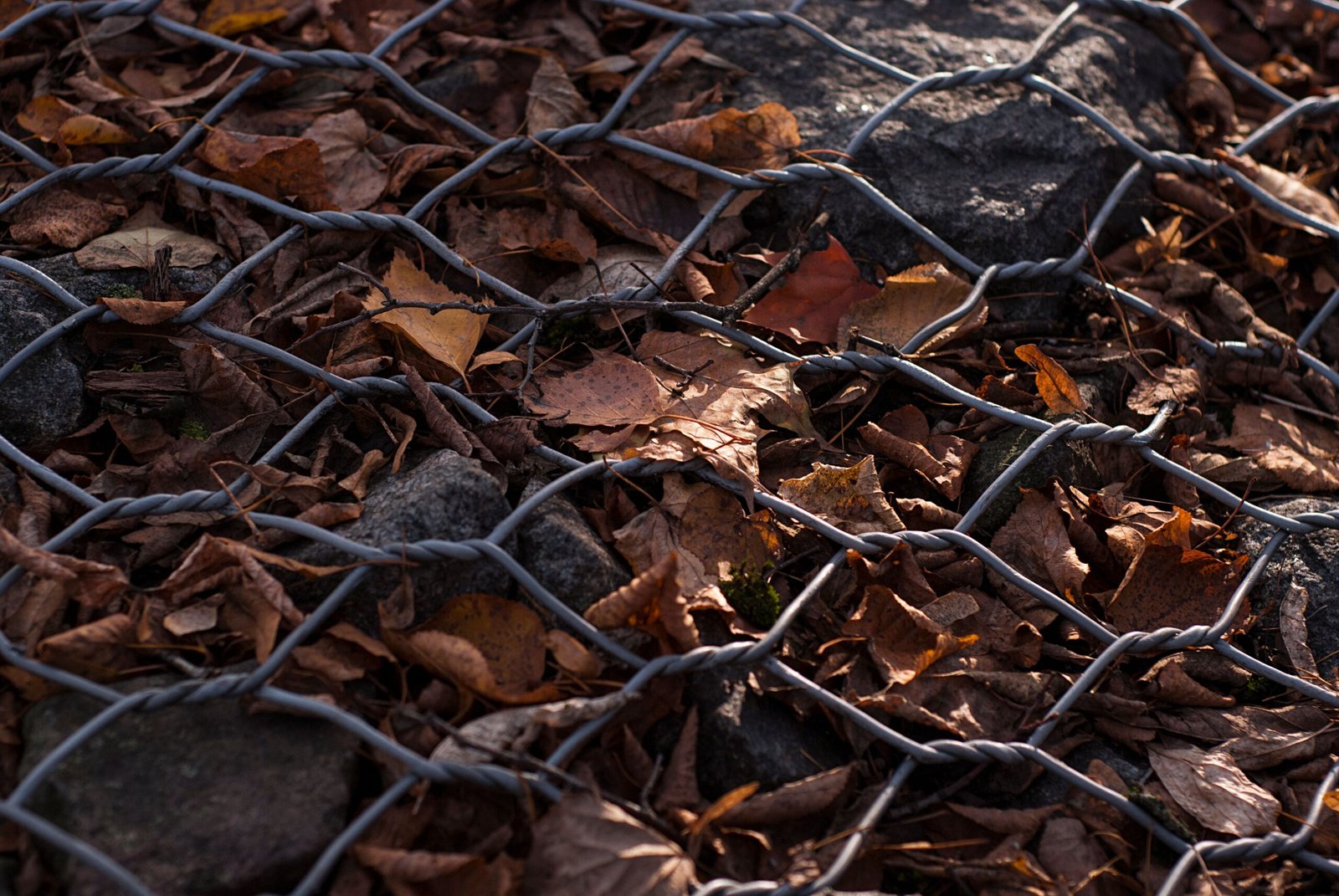
Wrap the wire mesh or netting around the outside, fixing it to the stakes as you go. Garden wire, cable ties or whatever you already have in the shed will do the job.
I would fix three sides firmly and make the fourth easier to undo. Future you will appreciate that when you want to get the finished leaf mould out without leaning over the top with a spade and inventing new swear words.
There is no need to build a floor. Put the bin straight onto soil so excess water can drain away.
You do not need a proper lid either. If the garden is very exposed and the top layer keeps blowing out, a spare piece of mesh laid over the top is enough.
That is the entire build.
Start Filling It With Leaves
Once the leaves begin falling properly, start loading them in.
Most ordinary deciduous leaves can go straight into the bin. Smaller, thinner leaves usually rot down faster than thick, leathery ones, but you do not need to stand there sorting leaves by species.
Rake them up, put them in and move on.
The only thing worth checking is moisture. Very dry leaves can sit around doing almost nothing, so if they feel crisp and papery when you collect them, give the pile some water.
You want damp leaves, not a paddling pool.
Do You Need to Shred Them?
Not necessarily.
If your leaves are fairly small and thin, just put them in whole.
Large, thick leaves take longer to break down, so shredding can help, but this does not automatically mean you need to buy a leaf shredder.
If the leaves are on the lawn, one of the easiest options is to run the mower over them and collect the chopped leaves in the grass box. It is quick, it reduces the volume and it saves adding another machine to the shed.
If you already own a shredder that copes well with leaves, by all means use it.
I would not buy one specifically for this project unless you deal with huge quantities every autumn. Build the bin first. If you later decide shredding the leaves is becoming a genuine chore, then think about the equipment.
What About Black Sacks?
Black sacks work perfectly well if you do not have room for a bin or only collect a small amount of leaves.
Fill the sacks, dampen the leaves if necessary and make a few holes in the plastic so some air can get in. Tie them loosely and put them somewhere out of the way.
The downside is that ten black sacks behind the shed can start to look rather less like composting and rather more like you have something to hide.
For a few bags, though, they are cheap, easy and effective.
Which Is Better: Bin or Sacks?
If your garden only gives you two or three bags of leaves each year, I would use sacks and save the space.
If you have mature trees, a large lawn or regular piles of leaves every autumn, the bin is much more convenient. You can keep adding to it, check the moisture easily and avoid accumulating bags all over the garden.
It also feels more like part of the garden rather than rubbish waiting to be removed.
The leaves come down, go into the bin and eventually go back onto the soil.
Does It Need Much Attention?
Very little, which is part of the appeal.
Check it occasionally during dry weather. If the leaves look completely dry, add some water.
You can turn the pile if you are feeling enthusiastic, but you do not have to keep fussing with it. Leaf mould is largely a case of giving the leaves the right conditions and then leaving them alone.
The pile will shrink dramatically as it breaks down, so do not assume something has gone wrong when a full bin suddenly looks half empty.
That is exactly what you want.
When Will It Be Ready?
This is the part where patience comes in.
After around a year, you may have partially broken-down leaf mould that is useful as mulch. Leave it longer and it becomes darker, finer and more crumbly.
How quickly it happens depends on the type of leaves, whether they were shredded and how moist the pile stays.
There is no need to obsess over the calendar. If you can still clearly see whole leaves, leave it longer. When the contents look dark, soft and earthy, start using it.
What Can You Use Leaf Mould For?
The easiest use is as a mulch around beds and borders. Spread it over the soil and let worms and weather gradually work it in.
It can also help improve soil structure and moisture retention, particularly in beds that dry out quickly.
Very well-rotted leaf mould can be used in homemade growing mixes too, but you do not need an elaborate plan for it. If you can turn something you would otherwise throw away into useful material for the garden, that is already a win.
Is a Leaf Mould Bin Worth Building?
If your garden produces a decent amount of leaves every autumn, I think it is.
The bin costs very little, takes hardly any time to build and gives you somewhere permanent to put the leaves you actually need to clear.
You can still leave some beneath hedges, let others sit in quiet corners for wildlife and mow a few into the lawn. The bin is simply for the rest.
Build it before the main leaf fall arrives and autumn becomes a much easier job. Instead of filling bag after bag and wondering where they are all going, you rake the leaves up, tip them in and know they will eventually end up back where they belong.