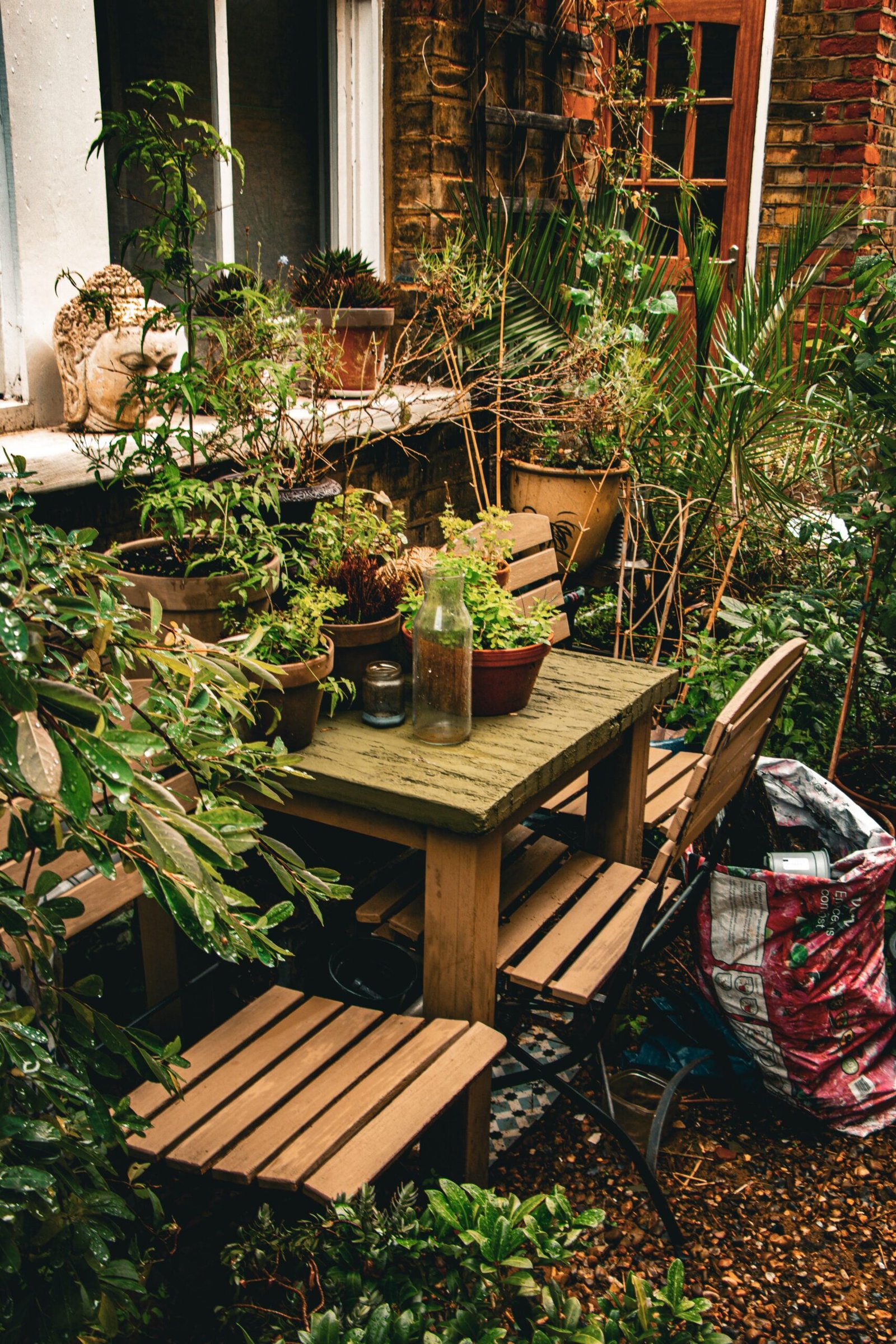
What Can You Really Grow in a Tiny Garden?
A small garden changes the way you grow food.
You cannot simply keep adding another bed when you run out of room, and there is not much point filling half the space with something that takes months to produce a handful of vegetables. In a tiny garden, every pot, corner, fence and patch of sunlight has to earn its place.
That does not mean you are limited to a few herbs on a windowsill. You can grow a surprising amount of food in a small garden, courtyard or patio, but it helps to stop thinking in terms of recreating a full-sized vegetable plot and start thinking about what actually suits the space you have.
The question is not really, What can I grow? It is, What is worth growing here?
Start With the Space You Actually Have
Before buying seeds or filling the patio with pots, spend a little time looking at the space itself. Notice where the sun falls, which corners stay shaded, whether there is a warm wall that catches afternoon heat and whether fences or railings could support climbing plants. A tiny garden can hold several different growing conditions within only a few metres, and that matters more than the overall size.
A sunny wall might be ideal for tomatoes or herbs, while a cooler corner could suit leafy crops better. A fence can become useful growing space for beans, peas or trained fruit. Once you stop looking only at the ground, a small garden often starts to feel much larger.
Grow Things You Actually Eat
This sounds obvious, but when space is tight there is very little room for crops you do not really want. If nobody in the house likes beetroot, there is no particular virtue in growing beetroot simply because it happens to fit neatly into a pot.
Start instead with the things you regularly buy. Salad leaves, herbs, spring onions, tomatoes, strawberries and soft fruit can all be especially worthwhile because you can pick only what you need and use it immediately. That freshness is one of the biggest advantages of growing in a small space.
A potato dug from a pot is lovely, but potatoes are also cheap and easy to buy. A handful of herbs, a bowl of salad leaves or a few ripe raspberries can feel much more valuable when every square foot matters. That does not mean potatoes are a bad choice; it simply means that in a tiny garden it is worth thinking about what gives you the most pleasure or usefulness for the space it occupies.
Salad Leaves Are Hard to Beat
If I had very little room, salad leaves would be near the top of my list. They grow quickly, they are happy in relatively shallow containers, and many can be harvested more than once. Instead of waiting weeks for one large lettuce to mature, you can sow loose-leaf varieties and pick them while they are young.
Rocket, spinach, mizuna, mustard leaves and loose-leaf lettuces all work well this way, and they do not necessarily need the sunniest part of the garden. In hot weather, a little afternoon shade can actually help stop some leafy crops from bolting too quickly.
A window box can produce a surprising amount of salad if you sow little and often. That is usually more useful than planting the whole packet at once and finding yourself with far too much lettuce for a fortnight and none at all after that.
Herbs Earn Their Space
Herbs make excellent small-space plants because a relatively modest pot can save you buying repeated packets from the supermarket. Parsley, chives, thyme, oregano, mint, rosemary, coriander and basil all have their place, although they do not all want the same conditions.
Mediterranean herbs such as thyme, rosemary and oregano like sun and good drainage, while parsley will tolerate slightly less sun and mint is happier with more moisture. Mint is also one of the few plants I would happily keep in a pot even if I had a very large garden, simply because once it escapes into open ground it can become rather too enthusiastic.
Herbs are also useful because they fit into awkward bits of space. They can sit along steps, beside paths, on shelves or in narrow troughs where there is no room for a proper vegetable bed.
Tomatoes Can Still Be Worth Growing
Tomatoes are one of those crops people assume need a greenhouse or a large plot, but that is not really true. A sunny patio, balcony or sheltered corner can be enough, provided the plant has a good-sized container and you are prepared to keep up with watering and feeding.
In a very small garden, compact or bush tomatoes can be easier because they take up less room and need less training. If you have a warm wall and somewhere to tie plants in, cordon tomatoes can also work well because most of their growth goes upwards rather than outwards.
What matters more than the number of plants is whether each one has enough room. One tomato grown properly in a decent container is usually more useful than four crammed into pots that dry out constantly and never quite thrive. That is true of a lot of small-space growing: fewer plants, given what they need, often produce more than a crowded collection.
Use Height, Not Just Floor Space
Beans and peas are useful in tiny gardens because they make the most of vertical space. A narrow strip of soil or a single large container can support a surprising amount of growth if the plants are trained upwards against a trellis, fence or frame.
Runner beans and climbing French beans are particularly good for this because they crop over a long period. Peas are useful too, although their season is usually shorter.
The only thing to watch is shade. A wall of climbing beans can cast quite a lot of it, so think about where you place taller crops. Vertical growing works best when it adds space rather than stealing light from everything behind it.
Make Use of Temporary Gaps
One of the best things about a tiny garden is learning to notice when space is free, even if only for a few weeks. Radishes and spring onions are perfect for this because they grow quickly and do not need much room.
You can sow radishes between slower-growing plants while they are still small, or around the edge of a larger container before the main crop fills out. Spring onions can be tucked into narrow spaces where almost nothing else would fit.
This does not mean cramming plants together until nothing has enough air or light. It is more about recognising that some spaces are only empty temporarily and making use of them while you can.
Strawberries Are Made for Small Gardens
Strawberries are one of the easiest fruits to fit into a small garden because they are happy in pots, troughs, window boxes and hanging containers. They also produce runners, so one healthy plant can eventually give you several more.
They are especially worthwhile because the difference between a freshly picked strawberry and one that has travelled through a supermarket supply chain is enormous. If you only have room for a few fruiting plants, strawberries are hard to argue against.
I would, however, be cautious about elaborate tower systems unless you know you can keep on top of watering. The higher and more exposed the container, the faster it tends to dry out. A simple wide pot or trough is often easier to live with and just as productive.
Soft Fruit Can Be Surprisingly Compact
Raspberries, blueberries and currants are not automatically ruled out by a small garden. There are compact varieties bred specifically for pots, and blueberries are particularly well suited to container growing because you can give them the acidic compost they prefer without worrying about the pH of your garden soil.
The main thing is to choose the right variety from the beginning. A vigorous blackberry squeezed into a patio pot will still want to behave like a vigorous blackberry. A plant bred for container growing is far easier to manage.
That is where a little research before buying saves a lot of work later.
Even Fruit Trees Can Work
A tiny garden does not necessarily mean giving up on apples, pears or other tree fruit. The important factor is the rootstock, because that controls how large the tree will eventually grow.
A suitably dwarfing rootstock can make it possible to grow fruit trees in large containers or to train them flat against walls. Cordons, fans and espaliers are particularly useful where space is limited because they give you fruit without demanding the same footprint as a full-sized freestanding tree.
This is one of those areas where the label matters. The variety may sound perfect, but if it is grafted onto a vigorous rootstock it can eventually become far larger than you intended.
Courgettes Need a Bit More Thought
Courgettes are famously productive, but they are also famously large. One healthy plant can take up a surprising amount of room.
That does not mean I would avoid them. If you love courgettes and use them often, one plant in a large container can be a very worthwhile use of space. I just would not plant three in a tiny garden and then act surprised when they start reaching across the path.
The same applies to squash. Some compact varieties are much easier to manage than traditional trailing types, which can quickly take over more space than you expected.
The lesson is not that these crops are unsuitable. It is that small gardens reward knowing the eventual size of a plant before you buy it.
Root Vegetables Still Have a Place
Carrots and beetroot can both work well in containers as long as the pot is deep enough for the variety you choose. Shorter carrot types are particularly useful where depth is limited, and beetroot gives you the bonus of edible leaves as well as roots.
There is also an advantage to growing carrots in containers if your garden soil is heavy, compacted or full of stones. In a pot, you control the growing medium, which can make producing decent roots much easier.
Potatoes also grow happily in large containers or bags, and there is something genuinely satisfying about tipping one out and finding potatoes hidden throughout the compost. Whether they are the best use of very limited space is another question. If you love growing them, then absolutely grow them. If your main aim is to get the greatest amount of useful food from a tiny area, herbs, salads, beans and fruit may give you more over a longer period.
Containers Need More Attention
The biggest drawback to growing food in pots is that containers are less forgiving than open ground. They hold a limited amount of compost, water and nutrients, so they can dry out quickly and need feeding more often.
That is why I would rather have a few decent-sized containers than a patio full of tiny pots. Larger containers hold moisture more steadily, give roots more room and are simply easier to manage.
Drainage matters too. A container has to hold enough moisture to keep plants happy without turning into a bucket of stagnant water every time it rains.
Small-space gardening is often less about squeezing in more and more pots and more about choosing containers that are large enough to do the job properly.
Do Not Fill Every Inch
Once you realise how much can be grown in containers, it is very easy to keep adding them until the garden starts to resemble the outside section of a garden centre.
Leave yourself somewhere to sit. Leave a path. Leave enough space to reach the plants at the back without climbing over everything else.
A small garden still has to be a pleasant place to use. Growing food should make the space feel more useful and enjoyable, not turn getting to the back door into an obstacle course.
Think in Layers
The most productive tiny gardens usually use more than one level. A fruit tree or climbing crop can occupy the upper space, herbs and strawberries can sit below, and pots can be arranged along walls or boundaries. Hanging baskets can hold strawberries or trailing tomatoes if you are prepared to keep them watered, while shelves can work well for smaller herb pots.
The point is not to force a plant into every possible gap. It is to use the space in three dimensions rather than thinking only about how many pots fit on the ground.
What I Would Grow First
If I were starting with a very small garden and wanted useful food rather than simply the experience of growing something, I would begin with herbs, salad leaves, tomatoes, climbing beans and strawberries.
They give repeated harvests, they are noticeably better when freshly picked, and they make good use of limited space. From there, I would add whatever I actually enjoy eating, whether that is blueberries, a compact raspberry, a pot of potatoes or a small apple tree.
There is no requirement to grow one of everything. In fact, a tiny garden is often better when you do the opposite.
Grow fewer things, choose them carefully and give them enough room to do well.
A small garden will never produce the same quantity of food as an allotment, but that is not a particularly useful comparison. A better question is whether the space outside your door can give you fresh herbs for dinner, strawberries warm from the sun, a bowl of salad you picked five minutes ago or tomatoes that actually smell like tomatoes.
It probably can.
And for a few square metres of garden, that is not a bad harvest.
SEO title: What Can You Really Grow in a Tiny Garden? | The Lived-In Garden
Meta description: A practical guide to growing food in a small garden, patio or courtyard, from salads and herbs to tomatoes, soft fruit and even fruit trees.
Suggested category: Small-Space Gardening
Suggested tags: small garden vegetables, growing food in small spaces, container gardening, patio vegetable garden, small garden fruit, grow your own food, tiny garden ideas
Excerpt: You do not need a vegetable plot to grow useful amounts of food. Discover which vegetables, herbs and fruits really earn their space in a tiny garden, patio or courtyard.