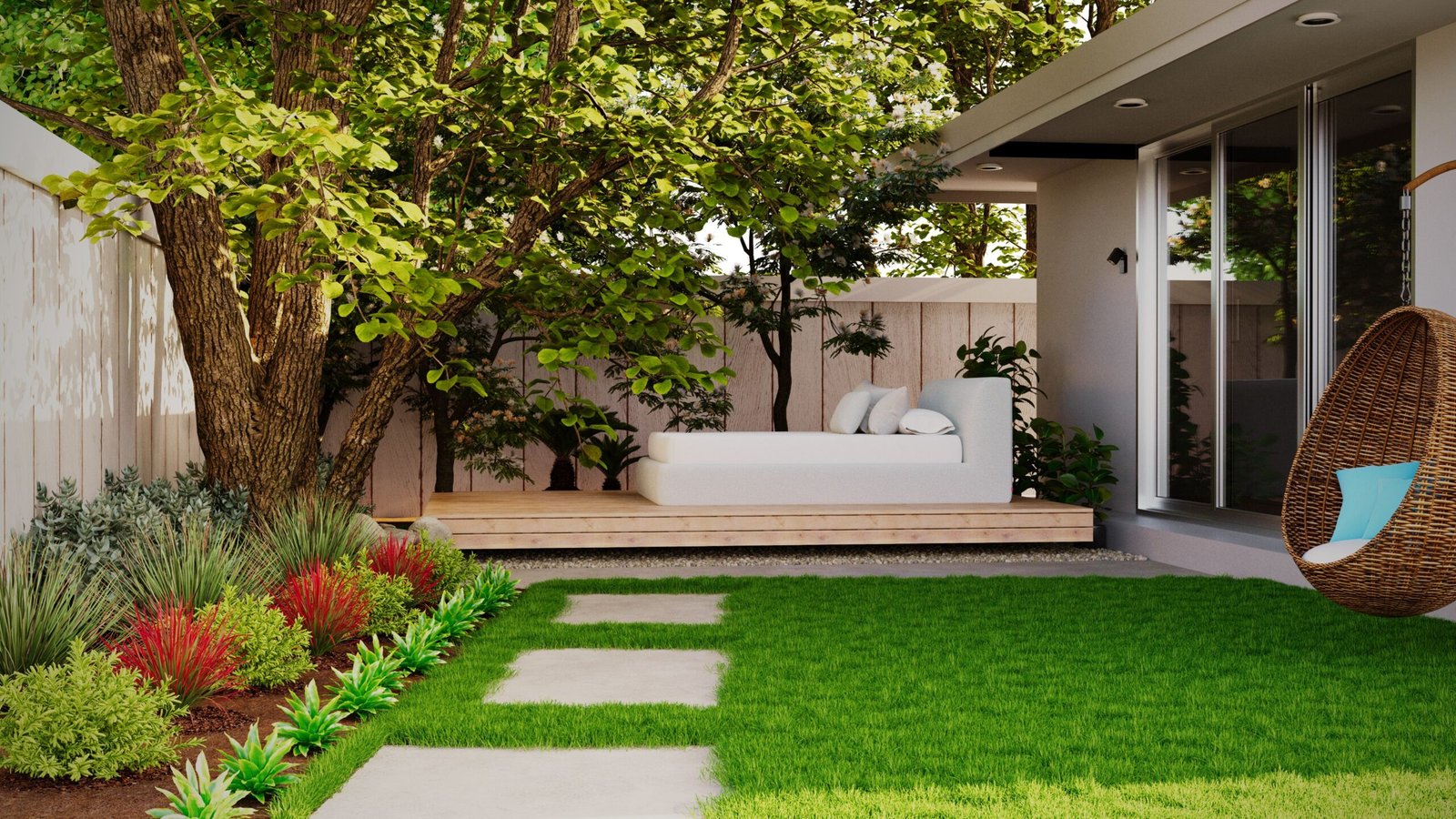
How to Divide a Garden Into Useful Areas Without Making It Feel Smaller
A big open garden can look impressive from the house. It can also leave you standing in the middle of the lawn wondering what, exactly, you are meant to do with all of it.
There may be a table near the back door, a shed at the far end and a washing line occupying the most visible position possible. Everything else is simply “the garden.”
But most of us want more than one thing from an outdoor space. We may want somewhere to eat, somewhere to grow vegetables, a quiet place to sit, room for wildlife and a practical corner for compost and tools.
Dividing the garden into useful areas can make it more interesting and easier to use. The trick is to create gentle divisions rather than chopping it into small fenced compartments like an outdoor office block.
Begin With What You Actually Want
Before adding paths, screens or planting beds, decide what the garden needs to do.
Think about real life, rather than the imaginary version of you who hosts elegant summer dinners and grows flawless vegetables.
You might want:
- a table close to the kitchen;
- a sunny place for growing;
- a shaded seat for hot afternoons;
- somewhere private to read;
- space for children or dogs;
- a wildlife corner;
- practical storage;
- a patch of open lawn where absolutely nothing is expected of you.
You probably do not need eight separate “zones.” Three or four useful areas will usually work better than a collection of tiny spaces, each containing one chair and a vague sense of purpose.
Work With the Garden You Already Have
Most gardens contain natural divisions before we add anything.
A mature tree creates shelter beneath it. A sunny corner feels different from a shaded boundary. A change in level can separate one part of the garden from another. The area beside the house is likely to feel more practical, while the far end may be quieter and more private.
Notice where the sun falls, where the wind catches, which areas feel overlooked and which routes you naturally take to the gate, shed or washing line.
Then give each space a job that suits it.
The sunniest section might become a growing area. A shaded corner could hold a bench. The awkward strip behind the shed may be ideal for storage because nobody was planning to sit there admiring it anyway.
Good garden design often begins with noticing what is already working rather than arriving with a ruler and declaring war on the lawn.
Do Not Show Everything at Once
A garden tends to feel smaller when you can see every inch of it from the house. Your eye reaches the back fence immediately, and that is the end of the story.
Partially hiding one section creates curiosity and makes the garden feel deeper. Use a planting bed, an open trellis, a pair of shrubs or a gently curving path to interrupt the view.
The aim is not to build a solid barrier across the middle. A six-foot fence may divide the garden successfully, but it can also create the atmosphere of a low-security prison.
Instead, allow glimpses through. Let the top of a bench show beyond tall grasses, frame a view through an arch or use airy shrubs that soften the boundary without completely blocking it.
When part of the garden is waiting to be discovered, the whole space feels larger.
Suggest Boundaries Rather Than Building Walls
A garden room does not need four sides.
One change in planting, surface or height may be enough to show that you have entered a different area.
Useful soft divisions include:
- low hedging;
- tall grasses or shrubs;
- open trellis;
- a narrow planting bed;
- a pair of large pots;
- an arch over a path;
- a step or slight level change;
- a switch from lawn to gravel or paving.
A low hedge says, “This is a separate space,” while still allowing the eye to travel across it. Tall, airy plants create privacy without making the garden feel boxed in.
You are organising the garden, not assigning every activity its own cubicle.
Let Paths Lead the Way
A path can do more than get you from the house to the shed. It can connect different areas and reveal the garden gradually.
A straight path is practical, particularly in a narrow garden, but it gives away the destination immediately. A gentle curve around planting or a tree creates more interest.
The curve should have a reason. A path that swerves randomly across the lawn can look as though it was planned by someone returning from the pub.
Paths also need to be comfortable enough to use. Stepping stones may look charming until you try to cross them with a wheelbarrow, a tray of drinks or wet slippers.
The garden still has to work on an ordinary Tuesday, not just in photographs.
Use Surfaces and Repetition to Join It All Together
Different ground surfaces can define areas without needing walls.
Paving near the house suits a dining table. Gravel beneath a bench makes the seat feel like a destination. Grass can keep the centre open, while bark or woodchip can separate productive beds.
Try to limit the number of materials. Brick, slate, gravel, decking, concrete and decorative pebbles all squeezed into one garden can look like a builder’s merchant displaying its entire summer range.
Repeat a favourite plant, flower colour or material in more than one area. Use the same timber for a screen and raised bed, or the same gravel along a path and beneath a seat.
This creates a visual thread, so the separate areas still feel like one garden rather than several unrelated makeovers that collided.
Give Each Area a Reason to Exist
Every section should offer something that draws you into it.
That might be a comfortable seat, morning sun, a birdbath, herbs to pick, scented planting, shade beneath a tree or a view back towards the house.
It does not need to be large or expensive. It simply needs to make the area useful.
A bench at the far end encourages you to walk there. A pond gives you a reason to stop and look. A growing bed brings you outside to pick tomatoes or the one courgette that has somehow become the size of a canoe.
A garden feels bigger when different parts of it support different parts of your life.
Keep Practical Areas Practical
Bins, compost, tools, water butts and washing all need somewhere to go. Pretending they do not exist usually results in them being scattered around looking guilty.
Keep frequently used things easy to reach.
A compost bin hidden at the furthest point of the garden may look discreet from the patio, but it is less appealing when you are carrying a dripping kitchen caddy across wet grass in February.
Use planting, trellis or the side of a shed to soften practical areas rather than banishing them to another postcode.
A well-designed garden should make ordinary life easier, not require an expedition every time you need a trowel.
Leave Some Breathing Space
Once you begin creating areas, it is tempting to keep adding them.
A dining area. A wildlife area. A reading corner. A morning-coffee seat. A separate place for staring thoughtfully into the distance.
Too many small sections can make the garden feel cramped and busy.
Leave some open lawn, simple paving or uncluttered planting between the more detailed areas. You do not need to find a special purpose for every square metre. Sometimes an empty patch exists simply to make everything around it look better.
Before building anything permanent, mark the proposed layout with string, pots or a garden hose. Move the furniture into place, walk the routes and check the view.
It is much easier to move a length of hose than a newly laid patio. There is no medal for making the wrong decision very efficiently.
A Divided Garden Can Feel Larger
Dividing a garden is not about packing more into it. It is about giving the space rhythm, purpose and a little mystery.
A dining area can sit close to the house. A planted path can lead towards a quieter bench. A growing area can have its own place without taking over the whole view. A pond or wildlife corner can draw you farther into the garden.
The divisions do not need to be solid or expensive. A change in surface, a pair of shrubs, an arch or a glimpse through tall planting may be enough.
When every part of a garden can be seen and understood at once, it often feels smaller than it is.
Give the eye somewhere to travel, give each area a reason to exist and let the garden reveal itself gradually.
You may not need a larger garden after all.
You may simply need to give the one you have more than one job.