Why Every Garden Needs Somewhere to Sit
A garden can be beautifully planted, carefully tended and full of things you are proud of, but if there is nowhere comfortable to sit, it can still feel strangely unfinished.
We spend so much time thinking about what a garden should grow, how it should look and what needs doing next that it is easy to forget one fairly important point.
You are allowed to actually sit in it.
Not while pulling weeds. Not while deadheading something. Not while mentally listing everything that needs cutting back.
Just sit.
A seat changes how you use the garden
The moment there is somewhere inviting to sit, the garden stops being only a place you work in.
It becomes somewhere you can have your coffee, read for ten minutes, watch the birds, talk to someone, or simply do absolutely nothing for a while.
That sounds obvious, but plenty of gardens are designed almost entirely around movement. Paths take you from one place to another. Borders give you something to maintain. Lawns need mowing. Containers need watering.
A chair or bench creates a reason to stop.
And once you stop, you notice much more.
You see which birds visit regularly. You notice the scent from a plant you normally walk past. You realise one corner catches the evening sun beautifully, or that another is completely sheltered when the rest of the garden is windy.
Sitting in a garden teaches you things about it that working in it often does not.
Put the seat where you actually want to be
This is where garden seating often goes wrong.
A bench gets placed somewhere because there is a space for it.
Then nobody ever sits on it.
Perhaps it faces the wrong way. Perhaps it is in full sun all afternoon. Perhaps it is exposed to the wind. Perhaps the view is mainly the shed.
A good place to sit should give you a reason to stay there.
That might be a view across the garden, a favourite planting area, somewhere birds gather, or simply a patch that catches the right amount of sun at the right time of day.
It does not have to be the most impressive part of the garden.
It just has to feel pleasant when you are sitting there.
One good spot is better than five awkward ones
It is easy to assume that more seating automatically makes a garden better.
It does not.
A small garden especially can start to feel cluttered very quickly if chairs, benches and tables are squeezed into every available corner.
One really good sitting spot can be far more useful.
If you have room for more, think about whether each one offers something different.
Maybe one catches the morning sun while another gives you shade later in the day.
Maybe one is close to the house and useful for coffee, while another sits further into the garden and feels more private.
There is no point creating three versions of the same seat.
Think about sun, shade and wind
A sunny seat sounds lovely until July.
A shady seat sounds lovely until October.
The best spot often depends on when you are most likely to use it.
If you tend to sit outside with a morning drink, look for somewhere that gets early sun.
If you prefer late afternoons or evenings, notice where the light falls then.
Wind matters too.
A seat tucked near a wall, hedge or fence can feel much more comfortable than one in the middle of an exposed lawn.
This is one of those times when spending a few days simply noticing your garden can be more useful than immediately moving furniture around.
Watch where the sun goes.
Notice which areas stay sheltered.
Then decide.
Do not underestimate the view
You do not need a grand vista.
A good garden view can be very small.
A pot of herbs, a patch of flowers, a bird feeder, a tree, even just a section of planting that changes through the seasons.
What matters is that there is something worth looking at.
And sometimes the best view is not the obvious one.
Turning a chair slightly can make the difference between facing a fence and looking diagonally across the garden.
Moving a bench a metre can suddenly open up a much nicer line of sight.
It is worth experimenting before deciding something needs replacing.
The seat does not need to be fancy
This is not really an article about garden furniture.
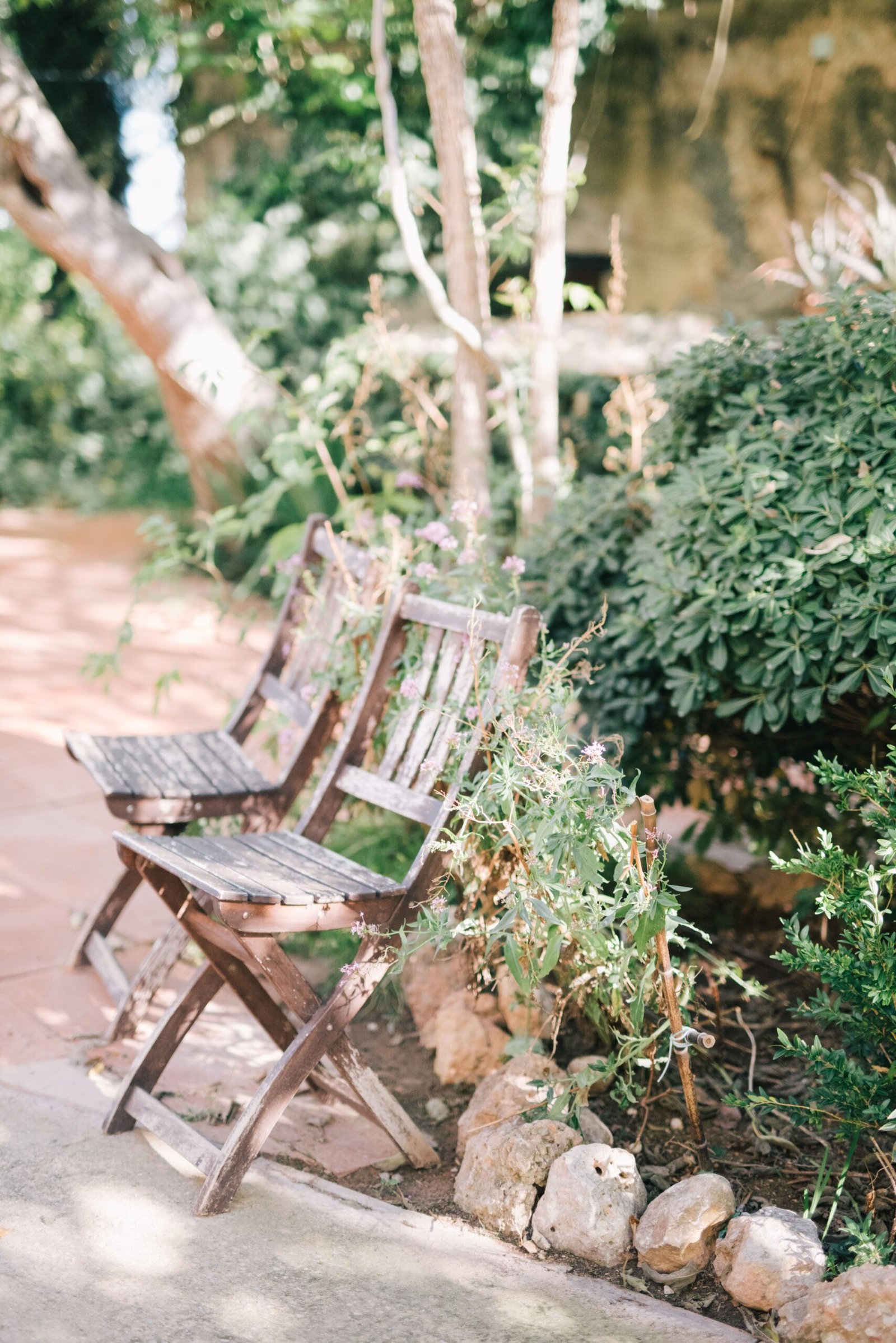
A faded wooden chair, an old bench or a pair of folding chairs that have seen better days can be far more inviting than an expensive set nobody ever uses.
There is something quite nice about garden furniture that has weathered a few summers. Wood fades. Paint wears. Metal gets a little rough around the edges. None of that matters much if the seat is sturdy, comfortable enough and sitting in exactly the right spot.
In fact, slightly battered furniture can make a garden feel more relaxed.
You are less likely to worry about muddy shoes, a wet mug ring or whether everything looks perfectly arranged. You simply sit down and use it.
And that is really what outdoor furniture is for.
If the chair works, let it work.
You can always soften the area around it with a pot, a small table, a cushion brought out when needed, or a plant allowed to tumble nearby.
The space does not need to look styled.
It needs to feel usable.
Gardens are allowed to look lived in.
In fact, they are often better for it.
A seat can make you notice neglected parts of the garden
Sometimes adding somewhere to sit reveals that a forgotten corner has more potential than you thought.
That bit behind the shed might catch lovely evening light.
The side return might be surprisingly sheltered.
A spot under a tree might be much cooler than the patio on hot days.
And sometimes the slightly scruffier corner is the nicest one of all.
A couple of old chairs under a tree can feel more welcoming than a perfectly arranged patio if that is where the shade falls and the birds gather.
We tend to think of useful garden space as planting space.
But usefulness can also mean somewhere that feels peaceful, comfortable or private.
Not every square metre needs to produce flowers, vegetables or visual drama.
Some of it can simply give you somewhere to be.
Let the garden grow around the seat
One of the nicest things about a permanent sitting spot is watching the garden gradually settle around it.
Plants edge closer. Climbers soften fences. Pots get moved nearby because you realise you enjoy looking at them from that angle.
A chair that looked slightly lost when you first put it there can start to feel as though it has always belonged.
There is no need to design the whole area in one go.
Sometimes the best garden corners happen slowly.
You sit there, notice what is missing, move something, add something, leave something else alone.
Over time, the space becomes yours.
The best seat is the one you actually use
There is no point having the perfect garden bench if it stays empty all year.
The best seat is the one you naturally drift towards.
The chair you take your coffee to.
The place you sit while dinner is cooking.
The spot where you end up watching birds for longer than you intended.
It might be faded, scratched, a little crooked or old enough that you cannot quite remember when you bought it.
If it is the place you choose to sit, it is doing exactly what it should.
That is when a garden starts feeling less like a project and more like part of your home.
And really, that is the point.
A garden should not only give you things to do.
It should give you somewhere to sit when you have done enough.