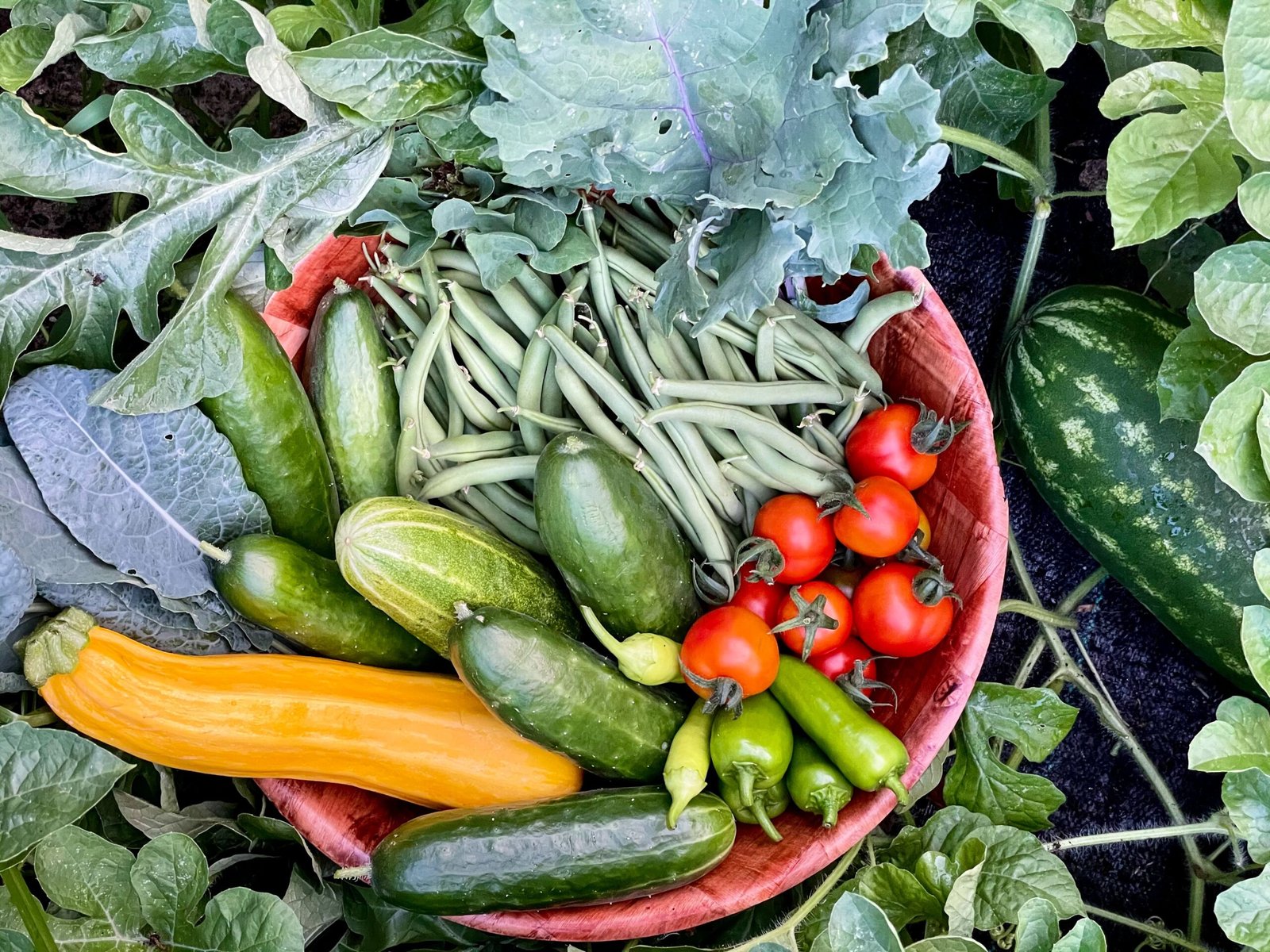
How to Keep a Kitchen Garden Productive Into Autumn
By late August, the kitchen garden can start to look a little tired around the edges.
The courgettes have stopped looking quite so enthusiastic, the beans are slowing down, the tomatoes are finally ripening faster than you can eat them, and there is usually at least one patch where you find yourself thinking, Well, that’s had its day.
It is tempting to decide the season is winding down and leave the rest to autumn.
But there is still plenty of growing left.
This time of year is less about starting from scratch and more about making the most of what is already there. Some plants will happily keep producing for weeks. Others are finished and simply taking up space. And once you clear a few gaps, there is often room for another small crop before the colder weather properly arrives.
Keep picking the plants that are still working
If the beans are still producing, keep picking them.
The same goes for courgettes, cucumbers and plenty of herbs. Regular harvesting really does help keep some plants going.
Courgettes are particularly good at hiding.
You can check the plant one evening, decide there is nothing ready, then come back two days later and discover something roughly the size of a cricket bat underneath a leaf.
Once fruits are left to get very large, the plant starts putting more energy into maturing them rather than producing new ones, so it is worth checking often.
Herbs can keep going surprisingly well too. Parsley, mint, chives and basil may all continue producing while conditions remain mild, especially if you keep using them.
This is not the time to save them for best. Eat them.
You might also like: https://thelivedingarden.com/how-do-you-know-when-vegetables-are-ready-to-pick/
Know when something has genuinely finished
On the other hand, there comes a point where a plant is not “still growing.”
It is just refusing to die.
If the peas have finished, the lettuce has bolted or the bean plant is producing one rather sad pod every fortnight, clear it.
I am all for giving plants a chance, but there is no benefit in keeping something purely because it still has a few green leaves.
Once tired crops come out, the bed often looks completely different.
You suddenly notice little spaces between plants, empty corners and bits of soil that could still grow something useful.
Healthy plant material can usually go on the compost heap. Anything badly diseased is better kept out.
Use the gaps rather than waiting until spring
You do not need a whole empty bed to keep growing.
A few feet of space can be enough for another sowing of salad leaves, rocket, spinach, radishes, mustard greens, spring onions or winter lettuce, depending on where you live and what your autumn weather is usually like.
Even a spare container will do.
You are not trying to recreate the abundance of July.
A handful of fresh spinach, some crisp leaves or a few radishes are still worth having, particularly when the rest of the garden is beginning to quieten down.
There is something very satisfying about walking outside for fresh leaves when most people have already mentally packed the vegetable garden away.
Do not get carried away with the seed packet
Freshly cleared soil can make even sensible people reckless.
You see an empty patch, open a packet of rocket and suddenly the whole lot is in.
Then every seed germinates.
For two weeks you feel like an incredibly successful gardener. Shortly afterwards, you are trying to persuade everyone you know that they really do need more rocket.
Small sowings are much easier to live with.
Put in a short row, then another one a week or two later. You get a steadier harvest and, if the weather turns awkward, you have not put all your hopes into one sowing.
Keep looking after the plants that still have something to give
Some plants have been working hard for months by this point.
Tomatoes and peppers in pots, especially, can have used up a lot of what was available in their compost.
If they are still healthy, flowering and setting fruit, keep caring for them. Do not suddenly stop watering or feeding simply because the calendar says summer is nearly over.
There is a balance here, though.
If a courgette plant looks dreadful, has stopped flowering and is clearly finished, let it go.
You do not have to nurse every vegetable into November.
Pots are brilliant at this time of year
Containers become especially useful once the season starts changing.
A pot emptied of an early crop can quickly become home to spinach, salad leaves or herbs.
Better still, you can move it.
That becomes increasingly useful because the garden you had in June is not quite the garden you have in September.
The sun is lower, shadows are longer and areas that were bright all summer may suddenly be shaded for much of the day.
A container can simply be picked up and moved somewhere better.
And if that somewhere happens to be nearer the kitchen door, even better.
There is a noticeable difference between wanting parsley and wanting parsley enough to walk to the far end of the garden for it when it is cold and raining.
Watch where the autumn sun actually falls
It is easy to remember a bed as “the sunny one” because it was sunny in midsummer.
By autumn, it might not be.
Fences, trees, sheds and larger plants start casting much longer shadows as the sun gets lower.
Before sowing anything new, spend a day noticing where the light falls now.
That may sound ridiculously simple, but it can make the difference between a useful little autumn crop and a disappointing patch of seedlings that never really get going.
You can also remove tired leaves from older plants where they are unnecessarily shading something younger.
Not because the garden needs to look tidy.
Because light is becoming more valuable.
A little protection can buy you several more weeks
You do not need a greenhouse to keep growing into autumn.
A simple cloche, some horticultural fleece, a cold frame or a sheltered wall can all help.
And cold is not always the biggest problem.
Young plants can suffer from strong winds or days of heavy rain just as easily.
Sometimes moving a pot into shelter or covering a small bed overnight is all that is needed.
There is no need to turn the vegetable garden into an engineering project.
Watering becomes less obvious
Once the weather cools, it is easy to assume everything has enough water.
Sometimes it does.
Sometimes the top of the soil is damp while a pot underneath is surprisingly dry.
New seedlings are particularly vulnerable because their roots are still shallow.
At the same time, established plants generally need less water than they did in high summer.
So this is the point where watering by habit stops being useful.
Check the soil first.
A finger pushed into the compost is still one of the most reliable gardening tools you own.
Autumn is also when next year begins
This is the part of the season when I start noticing what I would change next time.
Not in a dramatic planning-session way.
Just little things.
That tomato was excellent.
We did not need six courgette plants.
Nobody ate that much chard.
We somehow still did not grow enough parsley.
Those observations matter.
You do not need a beautiful garden journal unless you enjoy keeping one. A few notes somewhere you will actually find them next spring are enough.
Empty beds can also be mulched, compost added where needed, and space set aside for things such as garlic or other crops that will sit through winter.
The garden is already quietly setting itself up for another year.
It is not the end of the kitchen garden
An autumn kitchen garden looks different from a summer one.
That does not mean it has stopped being productive.
There may be fewer huge baskets coming indoors and more handfuls of leaves, herbs and smaller crops.
Some plants will be finishing while others are only just getting going.
And that is really what this part of the season is about.
Keep the plants that are still earning their space. Clear the ones that are not. Use the gaps when you can, and enjoy whatever the garden still wants to give you.
There is usually more left in it than you think.